
Eco Friendly Dog Grooming Supplies: 5 Sustainable Picks
Table of Contents
- Why Eco Friendly Dog Grooming Supplies Matter
- Quick Comparison: 5 Eco Friendly Dog Grooming Supplies
- 1. ʻĪlio Natural Dog Shampoo Bar: Plastic-Free Bathing
- 2. No Rinse Dog Paw Cleaner: Tablet Refills That Cut Plastic
- 3. Fluff Dust Natural Dog Dry Shampoo: Waterless Freshening
- 4. Paw and Hand Balm: Beeswax Protection for Paws and Hands
- 5. How to Groom a Dog Sustainably: Step-by-Step Routine
- Natural Dog Shampoo Ingredients to Look For (and Avoid)
- Frequently Asked Questions
Last Updated: September 20, 2026
Why Eco Friendly Dog Grooming Supplies Matter
Most dog owners never think about where the shampoo bottle goes after the last squeeze. It ends up in a landfill, along with the plastic pump, the shrink wrap, and the shipping box. Switching to eco friendly dog grooming supplies is one of the simplest ways to cut that waste without changing how well you care for your dog. This guide from Besdee Dog Co. walks through five sustainable picks, what they cost, and how to build a routine around them.
Quick Comparison: 5 Eco Friendly Dog Grooming Supplies
Product |
Price |
Format |
Replaces |
Best For |
|---|---|---|---|---|
$12.00 |
Solid bar |
Liquid shampoo bottle |
Full baths, sensitive skin |
|
No Rinse Dog Paw Cleaner |
$12.99 |
Dissolvable tablets |
Plastic paw wash bottle |
Muddy paws, travel |
Fluff Dust Natural Dog Dry Shampoo |
$15.00 |
Powder |
Aerosol dry shampoo |
Between baths |
Paw and Hand Balm |
$10.00 |
Tin |
Two separate products |
Paw protection, dry hands |
Sustainable routine |
Varies |
Combined |
Multiple bottles |
Ongoing care |
Each item removes a plastic container from your shelf and replaces it with something refillable, compostable, or reusable.

1. ʻĪlio Natural Dog Shampoo Bar: Plastic-Free Bathing
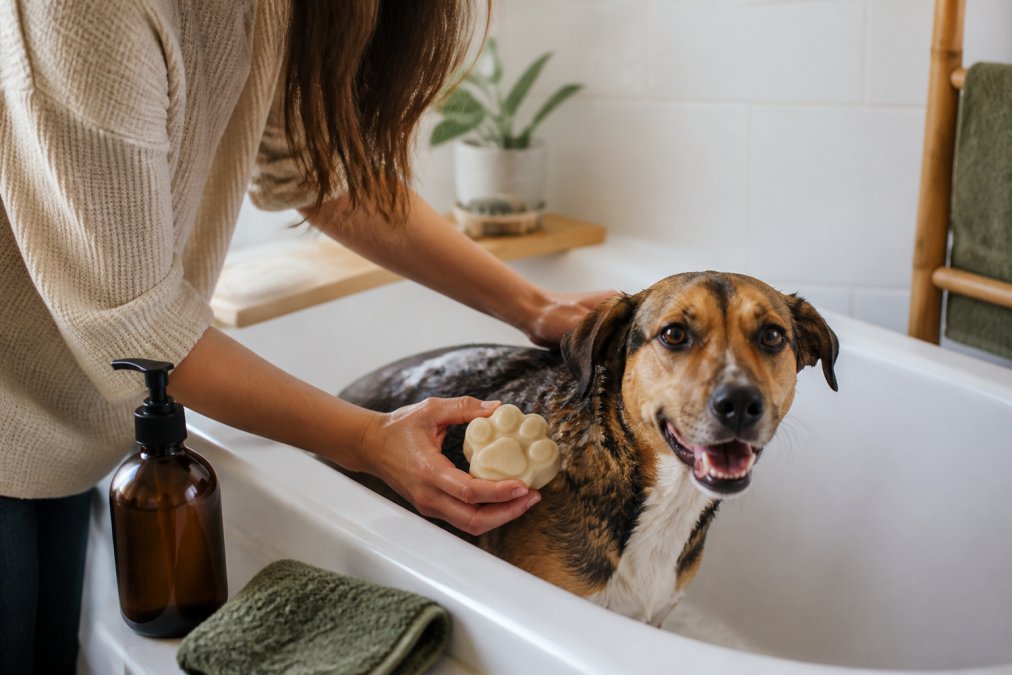
The ʻĪlio Shampoo Bar is the strongest starting point for anyone moving to eco friendly dog grooming supplies. It costs $12.00, comes shaped like a paw, and replaces one full bottle of liquid shampoo, lasting roughly four to eight washes depending on your dog's size.
2. No Rinse Dog Paw Cleaner: Tablet Refills That Cut Plastic
Paw cleaning is where most plastic sneaks into a grooming routine. This kit ships concentrated tablets instead of heavy bottles: drop one into the reusable bottle, add one cup of water, wait for it to dissolve, and you have foaming paw wash. Each kit delivers three full bottles' worth.
3. Fluff Dust Natural Dog Dry Shampoo: Waterless Freshening
Not every dirty dog needs a bath. Fluff Dust is a natural dry shampoo that freshens fur between baths, extending how long your dog stays clean and cutting water use. It costs $15.00 for over 2 ounces.
4. Paw and Hand Balm: Beeswax Protection for Paws and Hands
Hot pavement, sand, and rough trails all take a toll on paw pads. This balm blends mango butter, coconut oil, and sweet almond oil with Kauaʻi beeswax to form a protective barrier that soothes and softens dry skin. It costs $10.00.
5. How to Groom a Dog Sustainably: Step-by-Step Routine
A sustainable grooming routine is a sequence of small swaps, not one big overhaul. But a routine that only covers what you buy is half a routine; the other half is what happens to each item when it is used up. Here is how the five picks fit into a weekly and monthly rhythm, plus what to do with each at end of life.
The weekly and monthly rhythm
- Weekly: Wipe paws after walks with the foaming paw wash and a bamboo towel. This keeps mud and allergens out of the house.
- As needed: Dust on dry shampoo when your dog smells but is not dirty enough for a bath.
- Every 4-8 washes: Replace the shampoo bar. No bottle to buy, no plastic bottle to toss.
- Daily in summer: Apply paw balm before walks on hot pavement or sand.
- Monthly: Check your grooming shelf for empty bottles and swap them for refillable formats.
End-of-life: what to do with each item when it is done
Buying a compostable or refillable product only delivers the environmental benefit if you dispose of it correctly.
- Shampoo bar: Once it is a thin sliver, press the remnant onto a new bar to use it fully, or drop it in a home compost bin.
- Paw cleaner tablets and bottle: The tablets dissolve and leave nothing behind. The reusable bottle is designed to be refilled indefinitely, when it finally cracks recycle in the #2 bin.
- Dry shampoo powder: The tin or jar is usually reusable for refills or repurposed for storage. Once washed out its great for a spice jar.
- Paw and hand balm tin: Metal tins are widely recyclable and, in many cases, refillable. Wash out residue before recycling.
- Bamboo charcoal microfiber towels: Microfiber is plastic-based and does not compost. Wash them in a microfiber-catching bag and use them until they wear out; when they do, check whether your municipality accepts textile recycling.
The shipping footprint nobody talks about
A shampoo bar that ships across the country still has a carbon footprint. Two habits shrink it:

- Buy in batches, not one-offs. Ordering three bars at once cuts shipping emissions per bar roughly in proportion to the number of items in the box.
- Source locally when you can. A bar made a few states away travels less than one shipped from overseas, and local makers often use regional ingredients.
- Skip expedited shipping when you are not in a hurry. Ground shipping has a lower footprint than air, and grooming supplies are rarely urgent.
Professional vs. home grooming: the routine is not the same
If you groom your own dog at home, the swaps above are the whole picture. If you are a professional groomer running high volume, the math changes: you go through shampoo bars and paw wash far faster, so refill formats and bulk concentrates matter more than single-unit packaging. Ask suppliers whether they offer bulk refills, whether their packaging is returnable, and whether their formulas are concentrated so you are not paying to ship water.
'Īlio – Natural Dog Shampoo Bar →
Natural Dog Shampoo Ingredients to Look For (and Avoid)
Reading a label is the fastest way to tell real eco friendly dog grooming supplies from greenwashed ones. Most guides stop at "avoid sulfates and parabens", the easy part. The harder skill is spotting a product that markets itself as natural while hiding a conventional formula behind vague language. Here is how to read a pet shampoo label the way a formulator would.
Start with the ingredient order, not the front of the bottle
Ingredients are listed by weight, highest first. On a dog shampoo, the first one to three are usually water (often listed as "aqua" or "water"), a surfactant or cleanser, and a humectant or oil. If the front label shouts "oatmeal" but oatmeal appears near the bottom of a thirty-item list, it is a token amount, not the active ingredient. A genuinely oatmeal-forward formula shows colloidal oatmeal, oat kernel flour, or oat extract near the top.
Decode the vague terms that signal greenwashing
These phrases appear on packaging but tell you almost nothing about what is inside:
- "Natural blend" or "botanical complex" with no ingredient list, a real formula names every component.
- "Chemical-free", water is a chemical. This phrase is a marketing tell, not a safety claim.
- "Gentle enough for puppies" with no age guidance, puppies under a certain age have different skin pH and should not use adult formulas.
- "Vet-approved" with no veterinarian named, anyone can print this.
- "Eco-friendly packaging" with no material named, paper, glass, and bioplastic have very different end-of-life outcomes.
Ingredients worth seeking out
- Coconut-based cleansers (coco glucoside, cocamidopropyl betaine, sodium cocoyl isethionate), they lather and rinse without the harshness of sulfates like sodium lauryl sulfate.
- Colloidal oatmeal, soothes itchy, reactive skin and is one of the few ingredients with a long track record in veterinary dermatology.
- Aloe vera, a humectant that holds moisture in the coat; look for it high in the list to matter.
- Plant oils such as kukui nut, sweet almond, grapeseed, and jojoba, they condition without leaving a heavy residue.
- Neem powder, a botanical used in coat care; effective in dry formats where it can absorb oils and odors.
- Beeswax and plant butters (mango, shea), barrier ingredients for paw and nose balms.
Ingredients to avoid or question
- Synthetic fragrance and "parfum", an umbrella term that can hide dozens of undisclosed compounds and is a common trigger for skin reactions.
- Sulfates (SLS, SLES), effective degreasers, but they strip the coat's natural oils and are harsher than most dogs need.
- Parabens (methylparaben, propylparaben), preservatives with environmental and health concerns; many formulators have moved to alternatives.
- Phthalates, often hidden inside "fragrance" and linked to endocrine concerns.
- Artificial dyes (FD&C colors), purely cosmetic in a pet shampoo; if a product is blue or pink, ask why.
- "Fragrance" as the only scent descriptor, a naturally scented product can usually name the essential oil or botanical doing the work.
Match the formula to your dog, not the trend
A shampoo that is perfect for a double-coated breed may be wrong for a dog with allergies. If your dog has reacted to products before, patch-test on a small area and wait twenty-four hours. If your dog has a diagnosed skin condition, the ingredient list is a conversation for your veterinarian, not a marketing claim to trust.
Frequently Asked Questions
What are the best natural dog grooming products?
The best natural dog grooming products avoid synthetic fragrances, sulfates, and parabens. Look for plant-based cleansers, soothing ingredients like oatmeal and aloe vera, and lick-safe formulas. Shampoo bars, tablet-based paw washes, and beeswax balms are strong eco friendly dog grooming supplies that reduce plastic while caring for sensitive skin. Always check the ingredient list for transparency.
How can I make my dog's grooming routine more sustainable?
Switch to plastic-free shampoo bars, refillable or tablet-based cleaners, and dry shampoos that extend time between baths. Use bamboo or stainless-steel tools, compostable waste bags, and reusable towels. Choose products with minimal packaging and natural ingredients. These zero waste pet care tips cut plastic and water use without sacrificing cleanliness.
What ingredients should I avoid in dog grooming supplies?
Avoid sulfates, parabens, synthetic fragrances, phthalates, and artificial dyes. These can irritate sensitive skin and are risky if your dog licks their coat. Instead, look for natural dog shampoo ingredients like coconut-based cleansers, oatmeal, aloe vera, kukui nut oil, and essential oils that are dog-safe. Lick-safe formulas give peace of mind during bath time.
Are plastic-free dog grooming tools effective?
Yes. Plastic-free options like shampoo bars, bamboo scrubbers, and stainless-steel combs work as well as plastic versions when used correctly. A shampoo bar can last 4 to 8 washes depending on dog size, matching a bottle of liquid shampoo. Tablet-based paw washes dissolve into full bottles of foam, so you get the same cleaning power with less packaging.
What does lick-safe mean for dog grooming products?
Lick-safe means the product is made with ingredients safe for dogs if they lick their paws or coat after grooming. It avoids synthetic additives, harsh chemicals, and essential oils toxic to dogs. Choosing lick-safe grooming supplies is important because dogs naturally groom themselves. Always follow label directions and avoid direct contact with eyes, nose, and mouth.