
How to Soothe Dog Dry Skin Naturally: 7 Steps
Table of Contents
- Step 1: Spot the Signs and Rule Out Infection
- Step 2: Choose a Natural Dog Shampoo for Itchy Skin
- Step 3: Try Safe Home Remedies for Dog Dry Skin
- Step 4: Support Dog Skin Allergy Relief From the Inside
- Step 5: Apply Topical Treatments and Paw Balm Correctly
- Step 6: Control Environmental Factors and Breed-Specific Triggers
- Step 7: Know When to See a Veterinarian
- Frequently Asked Questions
Last Updated: October 4, 2026
Step 1: Spot the Signs and Rule Out Infection
Dry, flaky skin is one of the most common reasons owners search for ways to soothe dog dry skin, showing up as itching, dander, or small scabs along the belly and back.
Pruritus is the medical term for that persistent itch-scratch cycle. Scratching breaks down the skin barrier, opening the door to bacteria and yeast, that is how a dry patch becomes a secondary bacterial infection or a yeast infection.
Watch for these warning signs:
- Red, inflamed skin that feels warm to the touch
- A musty or yeasty smell coming from the coat
- Constant licking or chewing at the paws
Owner's Diagnostic Checklist
Run through this list before you reach for any product:
- Is the skin red, raw, or oozing? See a vet first.
- Does the coat smell musty or sour? That points to yeast.
- Are there bald patches or hot spots? These need treatment, not moisture.
If you checked any of the first four boxes, stop here and book a veterinary consultation. Natural care works best on healthy skin, not infected skin.
Step 2: Choose a Natural Dog Shampoo for Itchy Skin
The best natural dog shampoo for itchy skin uses gentle, plant-based cleansers and soothing agents like oatmeal and aloe, not harsh sulfates or synthetic fragrance.
Here is what to look for and what to avoid:
Ingredient Type |
Good Choice |
Why It Helps |
|---|---|---|
Cleanser |
Coconut-based surfactants |
Gentle, low irritation |
Soother |
Oatmeal, aloe vera |
Calms skin inflammation |
Moisturizer |
Kukui nut oil, mango butter |
Supports moisture retention |
Fragrance |
Dog-safe essential oils |
Avoids synthetic irritants |
Our ʻĪlio Shampoo Bar is built around this exact list: coconut-based cleansers, kukui nut oil, oatmeal, and aloe vera, in four dog-safe scents. One bar equals a full bottle of liquid shampoo and lasts four to eight washes.

Bathing Frequency and Lukewarm Water Temperature
Bathe a dry-skinned dog every two to four weeks at most. More often strips the sebum production your dog needs to protect its coat. Always use lukewarm water, never hot, and rinse until the water runs clear.
Step 3: Try Safe Home Remedies for Dog Dry Skin
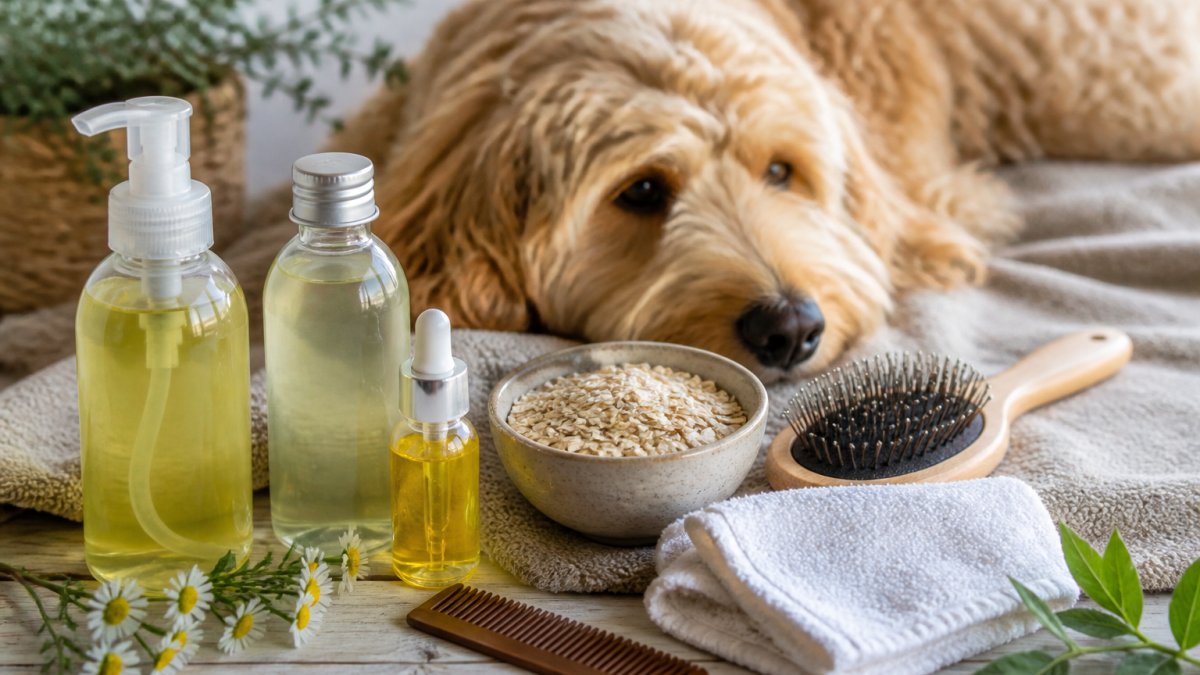
Home remedies for dog dry skin work best when they add moisture without clogging pores or feeding yeast. Coconut oil, colloidal oatmeal, and aloe vera gel are the safest starting points, but each has a correct dose, frequency, and hard limit, most owners get the ingredient right and the application wrong.
Coconut Oil: Dose, Frequency, and the Yeast Caveat
Use food-grade, unrefined coconut oil: a pea-sized amount for a small dog, a teaspoon for a large dog, rubbed into the skin rather than the coat. Apply once daily for up to five days, then two or three times a week. It is roughly 50 percent lauric acid, a medium-chain fatty acid with mild antibacterial and antifungal action. The trade-off: it is comedogenic, so it can clog pores and trap moisture in skin folds, and it feeds yeast.
Colloidal Oatmeal Rinse: The Correct Ratio
The soothing compound is beta-glucan, and it needs contact time with skin. Grind one cup of plain rolled oats into a fine powder, whisk into one gallon of lukewarm water, and steep five minutes. Pour over the dog from the neck down, work into the skin, and let sit ten minutes before rinsing with lukewarm water. Do this no more than once a week, and skip flavored or instant oats.
Aloe Vera: Pure Gel Only
Use 100 percent pure aloe vera gel, not green drugstore gels with alcohol, artificial color, and lidocaine. Aloe contains acemannan, a polysaccharide that supports wound healing and calms inflammation; apply a thin layer to dry patches once or twice daily. It is safe topically but causes vomiting and diarrhea if eaten, so apply where your dog cannot easily lick it off, or distract with a treat for ten minutes.
Other Remedies Worth Knowing
- Vitamin E oil: Prick one capsule onto a dry patch. Good for small spots like elbows and the nose, but too thick for large areas.
- Fish oil applied topically: Rarely worth it, it smells, stains, and the same omega-3s work better eaten.
- Apple cider vinegar: Stings broken skin. If used at all, dilute one part vinegar to three parts water and apply only to intact skin, never raw or oozing patches.
The Rules That Keep These Remedies Safe
- Patch-test any new remedy on a small area for 24 hours first.
- Never apply a remedy to broken, oozing, or infected skin, that is a vet visit.
- Stop immediately if redness, swelling, or scratching increases within a few hours.
Essential Oil Safety Warnings
Never apply undiluted essential oils to your dog. Many oils safe for humans, tea tree, eucalyptus, peppermint, wintergreen, citrus, cinnamon, are toxic to dogs when licked or absorbed, and cats face even higher risk. Even diffusers can cause drooling, wobbling, and lethargy in a small dog in a closed room.
Step 4: Support Dog Skin Allergy Relief From the Inside
Dog skin allergy relief starts in the bowl, not the bath. Omega-3 fatty acids and other essential fatty acids reduce skin inflammation from the inside and support the skin microbiome.
Look for these diet upgrades:
'Īlio – Natural Dog Shampoo Bar Handcrafted in Hawaiʻi →
- Fish oil rich in EPA and DHA, dosed by your vet
- A hypoallergenic or limited-ingredient food if food allergy is suspected
- Probiotics to support gut and skin health
Dietary deficiencies in zinc or certain vitamins can also cause flaky coats. Ask your vet before adding any supplement, since too much of some nutrients causes its own problems.
Step 5: Apply Topical Treatments and Paw Balm Correctly
Proper topical application is where most owners go wrong: they slather product on the coat instead of the skin, or apply too much and the dog licks it off within minutes.
Use this order for best results:
- Bathe and towel dry the coat first.
- Part the fur so you reach skin, not just hair.
- Apply a thin layer to dry patches, paws, and the nose.
- Distract your dog for ten minutes so the product absorbs.
- Wipe off any excess before your dog can lick it.
Our Paw and Hand Balm fits this routine: mango butter, coconut oil, sweet almond oil, and Kauaʻi beeswax form a lick-safe shield against hot pavement and rough trails. A pea-sized amount goes a long way.

Step 6: Control Environmental Factors and Breed-Specific Triggers
Environmental allergens and breed genetics drive more dry-skin cases than most owners realize. Dust mites, pollen, harsh cleaners, and dry indoor air all pull moisture from the skin barrier, so the fix is not one product but small changes matched to your dog's breed, coat type, and season.
Indoor Air and Cleaning: The Numbers That Matter
- Humidity: Aim for 40 to 50 percent indoors. Below 30 percent, skin loses moisture overnight and flaking increases. A basic hygrometer tells you whether you need a humidifier.
- Bedding: Wash weekly in fragrance-free, dye-free detergent. Hot water (at least 130°F) kills dust mites; skip fabric softener and dryer sheets, which leave an irritating waxy residue.
- Floors: Use unscented, pet-safe cleaners. Pine, ammonia, bleach, and quaternary ammonium disinfectants are common triggers; diluted white vinegar handles most messes.
Seasonal Allergy Management
Allergies follow a calendar, and so should your routine.
- Spring (tree pollen): Wipe paws and belly with a damp microfiber cloth after every walk; rinse the cloth after each use.
- Summer (grass and weed pollen, plus heat): Walk early morning or late evening when pollen counts are lower. Test pavement with the back of your hand for five seconds before walking.
- Fall (ragweed and mold): Mold spikes after rain and in leaf piles. Keep your dog out of wet leaf litter and dry paws after walks.
Breed-Specific Skin Sensitivities
Some breeds carry a higher risk of dermatitis and folliculitis by genetics, and the grooming routine should match the breed, not a generic schedule.
- Brachycephalic breeds (Bulldogs, French bulldogs, pugs, Boston terriers): Deep folds trap moisture and yeast. Clean folds daily and dry thoroughly; coconut oil in a fold is a yeast buffet. Besdee’s Dry Shampoo for Dogs can help with that.
- Double-coated breeds (German shepherds, golden retrievers, labs, huskies): Prone to environmental allergens and hot spots. Never shave, the undercoat regulates temperature and protects skin. Brush two to three times a week.
- Hairless and lightly coated breeds (Xoloitzcuintli, Chinese crested, American hairless terrier): Moisturize every two to three days, plus sunscreen on exposed skin outdoors. Their skin produces less sebum and has no coat to buffer sun, wind, or cold.
Grooming Frequency by Coat Type
- Short, smooth coats: Bathe every four to six weeks, brush weekly with a rubber curry.
- Double coats: Bathe every four to six weeks, brush two to three times weekly, and never shave.
- Curly or wool coats (poodles, doodles, bichons): Bathe every three to four weeks and brush daily to prevent mats, which trap moisture and cause hot spots.
Step 7: Know When to See a Veterinarian
See a vet when itching disrupts sleep, skin is broken or oozing, or home care shows no improvement in two weeks. Symptom management at home cannot fix an infection, a thyroid issue, or a true food allergy.
Book a veterinary consultation if you notice:
- Open sores, bleeding, or pus
- A sudden spread of hair loss
- Weight loss or appetite changes
A vet can run skin scrapes, allergy tests, or bloodwork to find the root cause. Natural care then becomes a support tool, not a substitute for treatment.
Frequently Asked Questions
How often should I bathe a dog with dry, sensitive skin?
Most dogs with dry skin do best with a bath every 4 to 6 weeks using lukewarm water and a pH-balanced, soap-free shampoo. Bathing more often strips natural oils and damages the skin barrier, which worsens dryness. If your dog needs more frequent rinses for environmental allergens, use plain lukewarm water between full baths. Always follow with a moisturizing balm or conditioner to support moisture retention.
Is it safe to use coconut oil on a dog's dry skin?
Yes, virgin coconut oil is generally safe for dogs when applied topically in small amounts. It contains lauric acid, which can help soothe irritation and support the skin barrier. Massage a pea-sized amount into dry patches, then distract your dog for 10 minutes so it absorbs. Too much oil can soften stools if licked off in large quantities, so keep applications light. For paws and noses, a beeswax-based balm often stays put longer.
What home remedies actually work for dog dry skin?
Colloidal oatmeal baths and aloe vera gel (inner leaf only, no latex) can calm itchiness and add moisture. Adding omega-3 fatty acids to meals supports the skin from within. Avoid essential oils unless they are dog-safe and properly diluted, since many are toxic. If dryness persists beyond two weeks, a veterinarian can check for underlying allergies or thyroid issues.
When should I see a veterinarian for my dog's skin irritation?
Book a vet visit if you notice open sores, hot spots, a yeasty smell, hair loss, or if your dog scratches constantly for more than a few days. These signs point to secondary bacterial or yeast infections that need prescription treatment. Also seek help if home remedies for dog dry skin cause redness or vomiting. Early veterinary consultation prevents minor dryness from becoming a chronic skin condition.
Dry, itchy skin wears down both dog and owner, and guessing at fixes usually makes it worse. At Besdee Dog Co., we built our line for exactly this problem: small-batch, nurse-formulated care that is gentle on sensitive skin and safe if your dog licks it. Our ʻĪlio Shampoo Bar and Paw and Hand Balm use clean, plant-based ingredients and come in refillable, planet-minded packaging. Get started with Besdee Dog Co. and give your pup calmer, healthier skin.